Identification
White Mold on Concrete or Efflorescence? A Homeowner's Guide
Is the white stuff on your concrete harmless efflorescence or dangerous white mold? Our guide helps you identify, clean, and prevent it.
Fast facts
- Efflorescence is a harmless, crystalline salt deposit that dissolves in water.
- White mold is a living fungus with a fuzzy or slimy texture that does not dissolve in water.
- A simple water spray test is the easiest way to tell the difference.
- Both issues are caused by excess moisture, which must be addressed to solve the problem permanently.
- Small areas of mold can be a DIY job, but large-scale growth requires a professional.
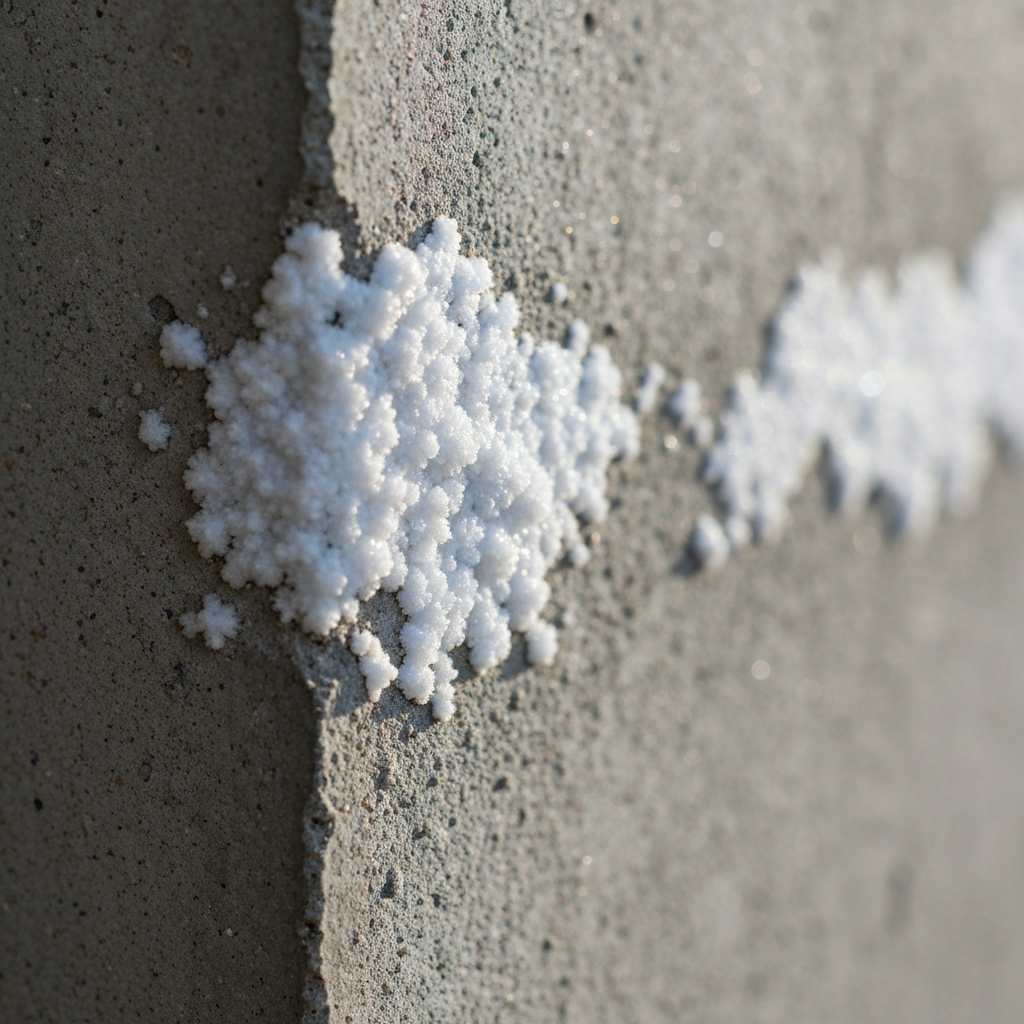
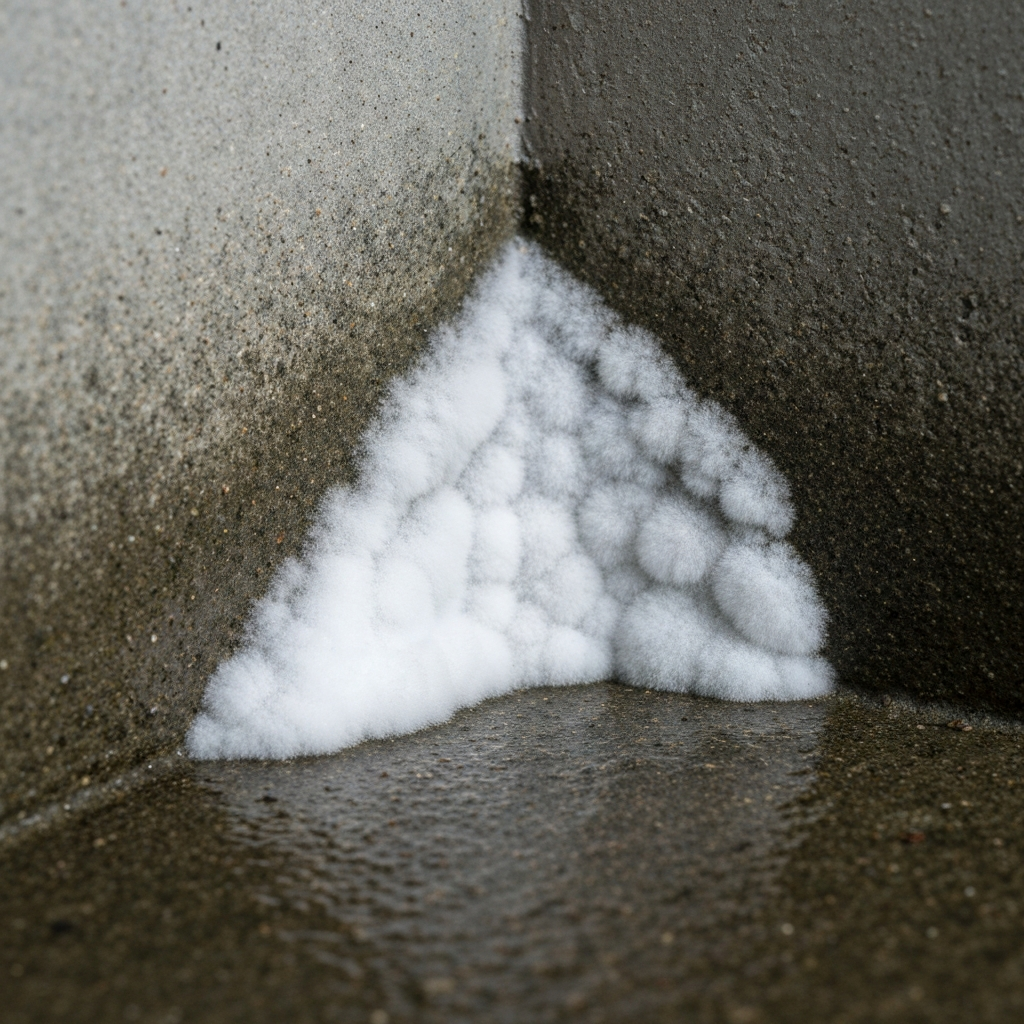
Photo examples
Is That White Stuff on My Concrete Dangerous?
You walk into your basement or garage and you see it: a patch of white, fluffy-looking substance creeping across the concrete floor or wall. Your mind immediately jumps to one word: mold. It’s a moment that can send a shiver of anxiety down any homeowner’s spine. Is it dangerous? Will it spread? What do I do now?
Before you panic, take a deep breath. While it could certainly be white mold on concrete, there’s another very common, and thankfully harmless, culprit: efflorescence.
As health-conscious homeowners, it’s crucial to know the difference. One is a cosmetic issue signaling a moisture problem, while the other is a potential health concern that also signals a moisture problem. This guide will walk you through everything you need to know to identify what you’re seeing, deal with it safely, and prevent it from coming back.
Understanding Efflorescence: The Harmless Imposter
Let's start with the best-case scenario. That white, chalky substance might just be efflorescence.
What Exactly Is Efflorescence?
Efflorescence (a fancy word from the French for "to flower out") is a deposit of crystalline salts left behind on a surface. Concrete, brick, and stone are porous materials that naturally contain mineral salts. When water seeps into these materials, it dissolves the salts. As the water later evaporates from the surface, it leaves those salt deposits behind.
The result is a white, sometimes glittery, layer that can look alarming but is chemically simple. Think of it like the salt stains you might get on your boots in the winter. While efflorescence itself won’t harm you, it’s a big, flashing sign that you have a moisture issue that needs your attention.
How to Identify Efflorescence: Quick Visual Cues
Here’s how to spot this mineral-based imposter:
- Texture: It feels dry, brittle, and crystalline. If you pinch it between your fingers (wear gloves!), it will crumble into a fine powder.
- Location: It only appears on masonry like concrete, brick, stucco, or stone. You will not find it on drywall, wood, or other non-masonry surfaces.
- The Water Test: This is the most definitive DIY test. Spray a small amount of water on the substance. Efflorescence will dissolve and seem to disappear.
Identifying White Mold on Concrete: The Unwanted Guest
Now for the more serious possibility. White mold is a category of fungi that can appear white, greyish, or greenish-white. Unlike efflorescence, mold is a living organism.
What Is White Mold?
Molds are everywhere in our environment, but they only become a problem when they find a damp place to land and a food source. For white mold on concrete, the moisture is the key ingredient. The "food" can be any organic material on the concrete’s surface—dust, dirt, wood particles, or even the paper backing on drywall that’s touching the concrete.
When mold grows, it can release spores into the air, which can cause allergic reactions and respiratory issues in sensitive individuals. This is why identifying and removing it properly is so important. You can learn more about the most common types of household mold to better understand what might be in your home.
How to Identify White Mold: Key Differences
Here's how to tell if you're dealing with a fungal problem:
- Texture: White mold is typically fuzzy, cottony, or even slimy. If you touch it (again, with gloves!), it will smear or feel soft, not crumble into dust.
- Smell: This is a big one. Mold often has a distinct odor—musty, damp, and earthy, like old socks or rotting leaves. Efflorescence is odorless.
- The Water Test: If you spray water on mold, it won’t dissolve. It will simply get wet. The structure will remain intact.
- Growth Pattern: Mold grows and spreads, often in circular patches that can expand over time. It can grow on any surface, not just masonry, as long as moisture and food are present.
At a Glance: White Mold vs. Efflorescence
Still feeling unsure? Here's a quick cheat sheet.
Efflorescence
- Appearance: Crystalline, powdery, flaky
- Feel: Brittle, crumbles to dust
- Smell: None
- Water Test: Dissolves
- Health Risk: None directly, but indicates a moisture problem
White Mold
- Appearance: Fuzzy, cottony, can be slimy
- Feel: Soft, smears
- Smell: Musty and earthy
- Water Test: Does not dissolve
- Health Risk: Can cause allergic reactions and respiratory issues. Learn more about the health effects of mold exposure.
What to Do Next: Actionable Steps for Homeowners
Whether it’s mold or efflorescence, your next steps involve two phases: cleaning the substance and, more importantly, fixing the root moisture problem.
If You Have Efflorescence...
- Clean It Up: You can typically remove efflorescence with a stiff brush and some water. For stubborn deposits, a solution of white vinegar and water can help dissolve the salts. Always wear gloves and eye protection when cleaning.
- Find the Moisture Source: This is the critical step. Check for leaky pipes, cracks in the foundation, poor exterior grading that directs water toward your house, or high humidity. Efflorescence will always return if the water source isn't eliminated.
If You Suspect White Mold on Concrete...
Safety first! Before you do anything, put on an N95 respirator mask, safety goggles, and rubber gloves to protect yourself from inhaling spores or getting them on your skin.
For small areas (generally less than 10 square feet), you may be able to handle it yourself. You can find detailed instructions in our guide to DIY mold removal. In short, scrub the area with a stiff brush using a solution of household detergent and water. Avoid using bleach, as it is not effective on porous surfaces like concrete and can release harmful fumes.
But before you start scrubbing, certainty is key. Misidentifying mold can lead to improper cleaning, and ignoring a moisture problem allows it to get worse. This is where modern tools can give you peace of mind. At Mold Detector AI, we’ve developed a tool that uses photo analysis to help you distinguish between different growths and deposits.
Not sure if it’s just salt deposits or actual fungal growth? Upload a photo for an instant analysis.
When to Call a Professional
DIY isn't always the answer. It's time to call a licensed mold remediation professional if:
- The affected area is larger than 10 square feet.
- You smell a strong, musty odor but can't see the source (it could be behind walls).
- The mold comes back after cleaning.
- Someone in your home is highly sensitive, has asthma, or is immunocompromised.
- The problem is caused by sewage or contaminated floodwater.
Prevention: The Best Way to Keep Your Concrete Clear
The ultimate goal is to create an environment where neither mold nor efflorescence can form. Here’s how:
- Control Humidity: Use a dehumidifier in your basement or crawl space, aiming for a humidity level between 30-50%.
- Improve Ventilation: Ensure good airflow by using fans or opening windows when possible.
- Seal the Cracks: Inspect and seal any cracks in your foundation walls and floors with a concrete or masonry sealant.
- Manage Water Outside: Make sure your gutters are clean and downspouts direct water far away from your foundation. Ensure the ground slopes away from your house.
- Insulate Pipes: Prevent condensation by insulating cold water pipes.
Seeing white stuff on your concrete is a call to action. By using simple tests and careful observation, you can identify the culprit, take the appropriate steps, and protect your home and your health. And for those moments of uncertainty, tools like Mold Detector AI are here to provide a quick, clear answer.
Ready to put this into action?
Not sure if it’s just salt deposits or actual fungal growth? Upload a photo for an instant analysis.
Launch Mold Detector AI