Identification
Black Specks in Your AC Vents: Is It Dust or Dangerous Mold?
Seeing black specks? Learn to tell if it's harmless dust or harmful mold in your air vents. Get clear steps for testing, cleaning, and prevention.
Fast facts
- Black specks on vents can be either harmless dust or a sign of a moisture problem causing mold.
- Mold often appears as splotchy, fuzzy, or slimy patches and may have a musty smell, unlike dust which is typically dry and uniform.
- Moisture from condensation is the primary cause of mold in air vents; addressing humidity is key to prevention.
- Never use the HVAC system if you suspect widespread mold, as it can spread spores throughout your home.
- Use a tool like Mold Detector AI for a quick, initial analysis before deciding on professional remediation.
Photo examples
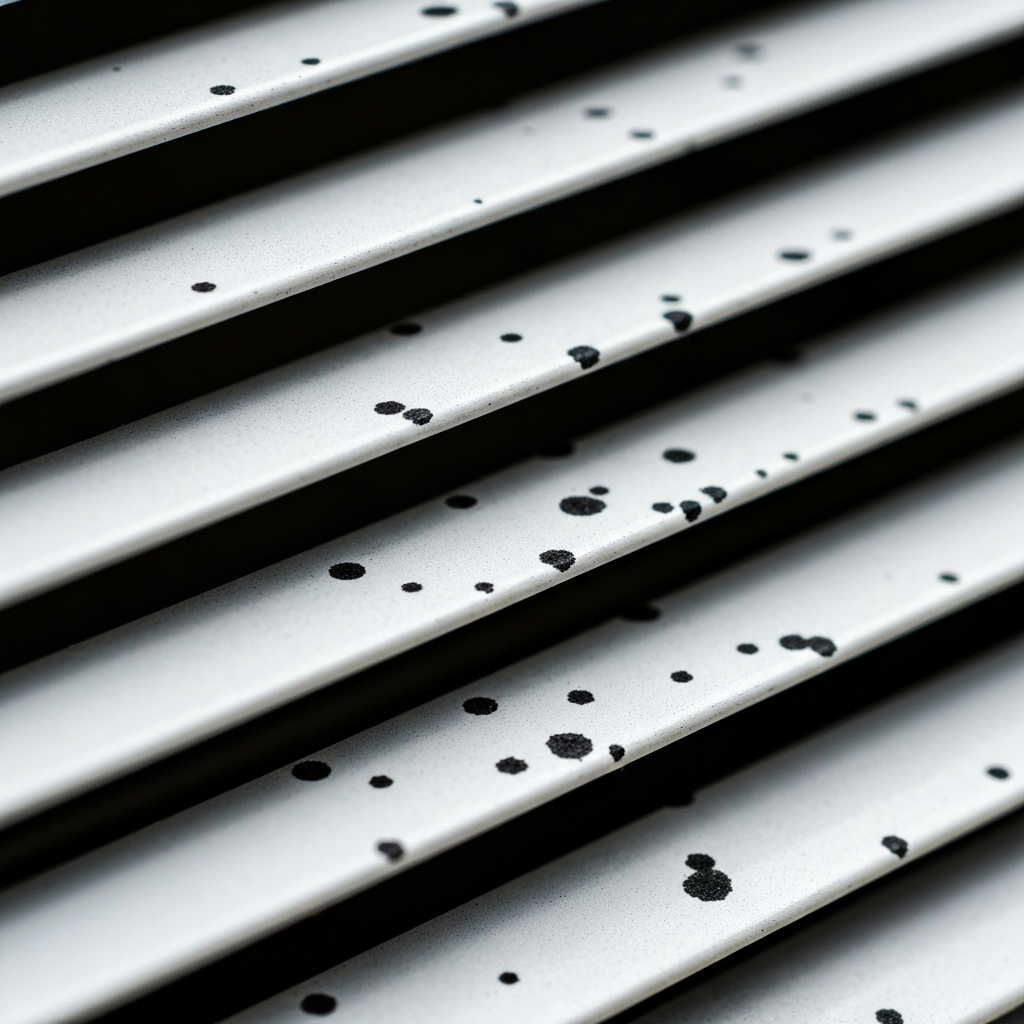
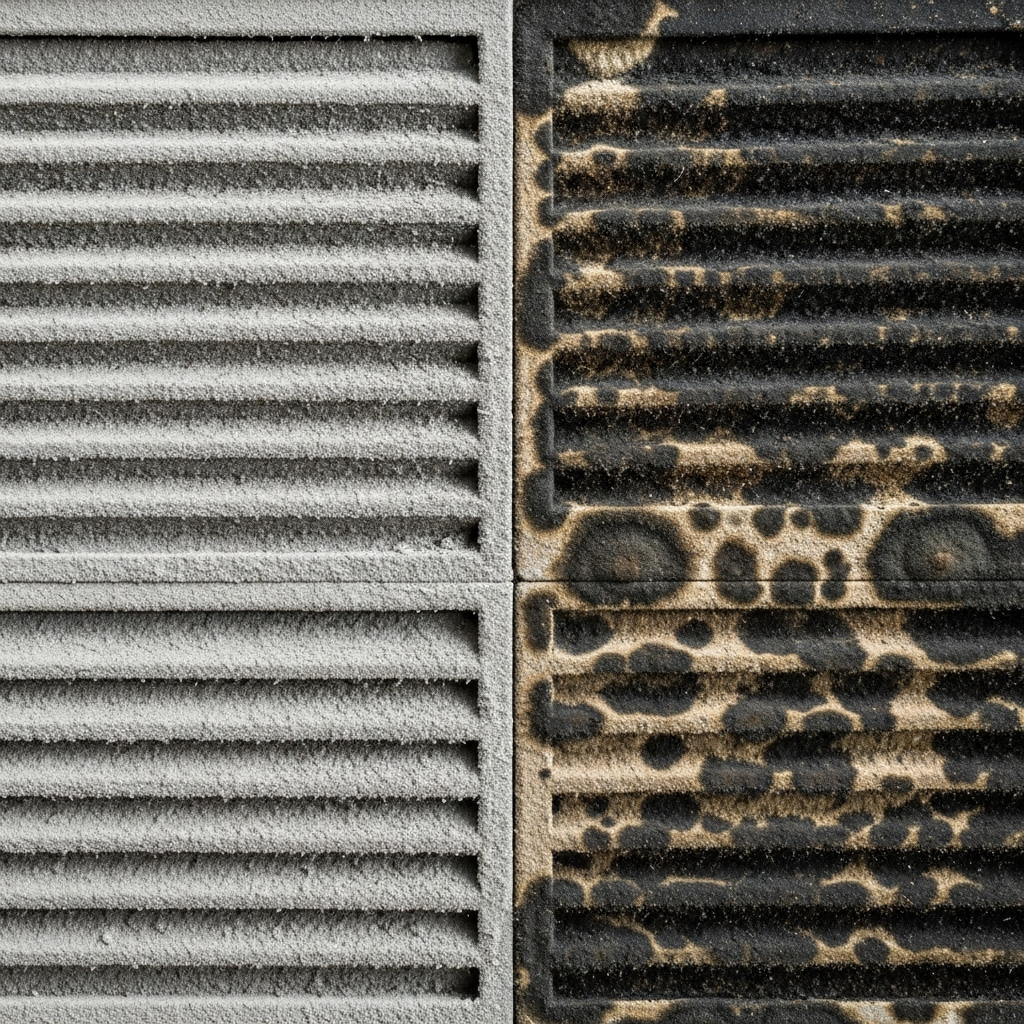

You’ve Seen the Specks. Now Don’t Ignore Them.
You’re relaxing at home, glance up, and notice them: a smattering of tiny black specks clinging to the metal grate of your air conditioning vent. Your first thought might be, “It’s just dust. I need to clean more.” But a nagging feeling in the back of your mind asks a more alarming question: “Could that be mold?”
It’s a valid concern for any health-conscious homeowner. The air circulating through your HVAC system is the air your family breathes every single day. The possibility of mold in your air vents isn’t just an aesthetic issue—it’s a potential health hazard.
This guide will give you the practical knowledge to investigate those black specks, understand the difference between dust and mold, and take clear, actionable steps to protect your home and your health.
The Critical Question: Harmless Dust or Harmful Mold?
First, let’s be clear: not every black speck is a sign of a full-blown mold infestation. Your HVAC system is the lungs of your home, and it circulates a lot of air. Over time, it’s completely normal for dust, debris, and tiny fibers from carpets and furniture to accumulate on your vent covers. However, the conditions inside your ductwork can also be a perfect breeding ground for mold.
Visual Cues: A Side-by-Side Comparison
Your eyes are your first and best tool. Get a flashlight and take a close look at the vent. Here’s what to watch for:
What Dust Looks Like:
- Distribution: Tends to be evenly and loosely distributed across the vent surface.
- Texture: Appears dry, dusty, and often looks like loose dirt or lint. It may have a slightly gray or brownish tint.
- Behavior: Wipes away easily with a dry paper towel or cloth, leaving the surface underneath clean. It doesn’t leave behind a stain.
What Mold Looks Like:
- Distribution: Often appears in splotches, clusters, or distinct spots. It’s not usually a uniform coating.
- Texture: Can look fuzzy, slimy, or velvety. It may appear slightly raised from the surface. Black mold (like Stachybotrys chartarum, though many species can be black) often has a speckled or patchy appearance.
- Behavior: Does not wipe away easily. When you try to wipe it, it may smear or leave behind a stained, discolored area on the vent. It seems to be “stuck” to the surface.
The “Smell Test”: Your Nose Knows
Mold gives off microbial volatile organic compounds (MVOCs), which have a distinct odor. If you notice a persistent musty, damp, or earthy smell, especially when your AC or heat kicks on, it’s a major red flag for mold in your air vents or somewhere else in the HVAC system.
Dust, on the other hand, is largely odorless. You might get a slight “stale” smell if it’s been a long time since you ran the system, but it won’t have that signature damp, mildewy scent.
Why Would Mold Grow in Air Vents, Anyway?
Mold needs three things to thrive: a food source, darkness, and moisture. Your air ducts unfortunately provide all three.
- Moisture: This is the most critical ingredient. Condensation naturally forms on the evaporator coils of your air conditioner. If your system has a clogged drain line or poor airflow, this moisture can drip into your ducts and linger. High indoor humidity also contributes.
- Food Source: Dust isn’t just dirt. It contains organic material like dead skin cells, pet dander, and pollen. For mold, this is an all-you-can-eat buffet.
- Darkness: Your ductwork is a dark, enclosed environment, providing the ideal habitat for mold to grow undisturbed.
When these conditions align, you have a perfect recipe for a mold problem that can quickly spread spores throughout your entire home every time the fan turns on.
A Quick, Safe Investigation
If you're still unsure, you can perform a simple test. But first, safety!
SAFETY WARNING: Before you touch or disturb potential mold, put on an N95 mask, rubber gloves, and safety goggles. If you have asthma or are sensitive to allergens, ask someone else to do this or skip straight to getting a professional opinion.
1. Turn off your HVAC system at the thermostat. You don’t want to blow spores around.
2. Dampen a cotton swab with a little bit of water and a drop of dish soap.
3. Carefully swab a small area of the black specks.
4. Examine the swab. Is it just gray dust and dirt? Or does it look inky black and smear, like you’ve wiped up something alive?
This isn't a definitive scientific test, but it provides another strong clue. For a more reliable answer without waiting for a lab, you can get an instant second opinion. Our service, Mold Detector AI, was designed for this exact situation. It uses powerful AI to analyze your photo and give you an immediate indication of whether the growth pattern is consistent with mold.
I’m Pretty Sure It’s Mold. What's Next?
Seeing what looks like mold can be stressful, but a methodical approach is your best bet. Panicking won't help, but swift action will.
Step 1: Keep the HVAC System OFF
This is非 negotiable. Do not run your air conditioner or heater if you suspect mold. Using the system will aerosolize the mold spores and distribute them to every room in your house, worsening the problem and contaminating clean areas.
Step 2: Get a Definitive Answer
Guesswork isn’t good enough when it comes to your family's air quality. You need to confirm your suspicions.
Don't guess with your air quality. Upload a clear photo of your vent to see if that dust is actually mold.
Using a service like Mold Detector AI gives you a fast, affordable, and data-driven assessment. It helps you understand the severity of the issue so you can decide on the right next step, whether it's a simple cleaning or calling in the experts.
Step 3: Decide: DIY Cleaning or Call a Professional?
The right course of action depends on the scope of the problem.
When to DIY:
If the mold is confined to a small area (less than a few square feet) and is only on the surface of a non-porous vent cover, you may be able to clean it yourself. Unscrew the vent cover, take it outside, and scrub it पुलिस with a vinegar-and-water solution or a registered mold-killing detergent. Let it dry completely in the sun before reinstalling. Never use bleach, as it can damage your ducts and release toxic fumes.
When to Call a Professional:
You should immediately call a certified HVAC or mold remediation specialist if:
- You see mold on multiple vents.
- The mold appears to go deeper into the ductwork.
- There is a strong, persistent musty odor.
- Anyone in your household is experiencing unexplained allergies, respiratory issues, or other health symptoms.
- The affected area is large.
Professionals have the specialized equipment (like high-powered vacuums, agitators, and cameras) to safely clean and disinfect your entire duct system without cross-contaminating your home.
Prevention is the Best Medicine
Once your vents are clean, you need to address the root cause: moisture. Follow these steps to prevent mold in your air vents from returning.
- Control Humidity: Keep your home’s humidity level between 30% and 50%. Use a dehumidifier in damp areas like basements.
- Use High-Quality Air Filters: Use a MERV 11 or 13 filter and change it religiously every 1-3 months. This traps mold spores and the dust they feed on.
- Schedule Regular HVAC Maintenance: Have a professional inspect and service your HVAC system annually. They will clean the coils and ensure the drain pan аксессуары are clear and functioning correctly.
- Insulate Ductwork: Ensure any ducts running through unconditioned spaces (like attics or crawlspaces) are properly insulated to prevent condensation from forming.
Breathe Easy Again
Finding black specks on your vents is an unnerving discovery, but it’s one you can handle. By carefully observing, testing, and taking decisive action, you can diagnose the problem and restore clean, healthy air to your home. Don’t let uncertainty fester. Identify the problem, address the cause, and breathe easy knowing you’ve protected your home and your family.
Ready to put this into action?
Don't guess with your air quality. Upload a clear photo of your vent to see if that dust is actually mold.
Launch Mold Detector AIFurther reading
Recommended next reads
- What Does Ceiling Mold Look Like? A Homeowner's Guide to Identification
- Mildew and Mold: What's the Difference and What Should You Do?
- Is It Mold or Dirt? A Homeowner's Guide to Telling the Difference
- Is It Dangerous Black Mold? Stachybotrys vs. Other Common Molds
- What Does Mold on Drywall Look Like? (Pictures & ID Guide for Homeowners)
- What Does Black Mold Look Like? A Homeowner's Guide with Pictures