Identification
That Pink Mold in Your Shower? Here’s What It Really Is
Discover what that pink mold in your shower really is (hint: it's not mold!). Learn how to safely clean and prevent this common pink slime. Get expert tips.
Fast facts
- The "pink mold" in your shower is typically a pink-pigmented bacteria called Serratia marcescens, not a fungus.
- It thrives in damp, soapy environments and is generally a low health risk for healthy individuals, but it's best to remove it.
- Cleaning with a simple baking soda paste and preventing moisture buildup are the most effective ways to manage it.
- Fuzzy texture or dark colors alongside the pink slime may indicate actual mold, requiring more caution and possibly professional help.
Photo examples

The Slimy Pink Surprise in Your Shower
You step into your shower, ready to start your day, and there it is: a slimy, pinkish-orange film creeping into the corners, clinging to the grout, or colonizing your shampoo bottle. Your first thought is likely, “Ugh, pink mold!” It’s an unsettling sight, and it’s natural to worry about what it is and whether it’s harmful.
As the editors at Mold Detector AI, we see a lot of photos of household growths, and this is one of the most common. The good news? That unsightly pink mold in your shower isn’t actually mold at all. But that doesn’t mean you should ignore it. Let’s break down what this pink visitor is, how to get rid of it, and how to keep it from coming back.
What Is That Pink Stuff, Really?
The infamous “pink mold” is almost always a type of airborne bacteria named Serratia marcescens. This tiny organism is found naturally in soil, water, and even on animals. It’s carried into your home on dust particles and can land anywhere, but it only becomes visible when it finds the perfect place to thrive.
And what’s the perfect place? A damp, stagnant environment with a steady food source. Your shower is a five-star resort for Serratia marcescens. It loves:
- Moisture: From your daily showers.
- Food: The fatty deposits in soap scum and shampoo residue are a feast for it.
- Warmth: The general temperature of a bathroom is just right.
As the bacteria colonies grow, they produce a distinct pink or reddish pigment, creating the slimy film you see. That’s why it often appears in places where water sits, like shower floors, grout lines, around the drain, and on shower curtains.
Is Pink Mold (Serratia marcescens) Dangerous?
For the vast majority of healthy homeowners, Serratia marcescens is more of a cosmetic nuisance than a serious health hazard. Unlike toxic black mold, it doesn’t release mycotoxins into the air.
However, it’s important to be aware that Serratia marcescens is an “opportunistic pathogen.” This means it can cause infections in individuals who are vulnerable, such as:
- People with compromised immune systems.
- Newborns and the elderly.
- Individuals with open wounds or recovering from surgery.
In very rare cases, particularly in hospital settings, it has been linked to issues like urinary tract infections, wound infections, and respiratory problems. But for the average person encountering it in their shower, the risk is extremely low. The primary goal is to clean it up for the sake of hygiene and to prevent it from getting out of hand.
How to Tell the Difference: Pink Bacteria vs. Actual Mold
While Serratia marcescens is the usual culprit, some true molds can have a pinkish hue. Knowing the difference can help you gauge the severity of the problem. If you’re ever truly unsure, that’s where a tool like Mold Detector AI comes in handy. A quick photo analysis can help you distinguish between a simple bacterial film and a potentially more serious mold problem.
Quick Visual Cues:
Pink Bacteria (Serratia marcescens):
- Texture: Slimy, smooth, and forms a thin film.
- Appearance: Looks like a stain or a residue that can be easily wiped away (though it will return if not properly cleaned).
- Color: Typically ranges from light pink to a deep reddish-orange.
Actual Pink Mold (e.g., Aspergillus, Fusarium):
- Texture: Fuzzy, hairy, or velvety. It will have a raised, three-dimensional texture.
- Appearance: Looks like a growth on or in a material, not just a surface film. You might see thread-like structures.
- Color: Can be pink, but also often accompanied by black or green spots.
The texture is the biggest giveaway. Slime = bacteria. Fuzz = mold.
Step-by-Step Guide to Cleaning Pink Mold in the Shower
Ready to banish the pink slime? The process is straightforward and doesn’t require harsh chemicals.
1. Safety First!
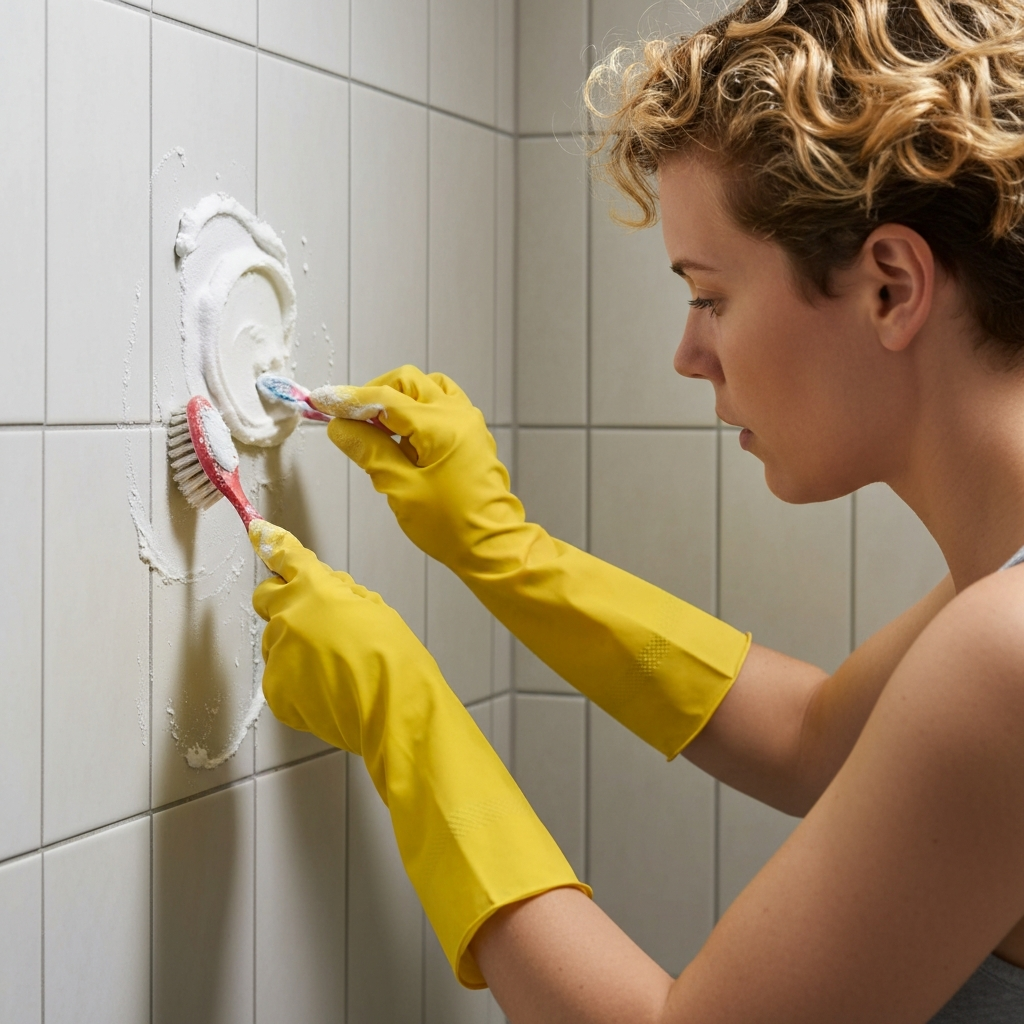
Even though it’s bacteria, you don't want it on your skin or in your eyes. Always wear rubber gloves and consider protective eyewear. Ensure your bathroom is well-ventilated by turning on the exhaust fan and opening a window or door.
2. Gather Your Cleaning Toolkit
- A stiff-bristled scrub brush (an old toothbrush works wonders for grout)
- Baking soda
- Liquid dish soap
- A small bowl and a spray bottle
3. The Cleaning Process
- Create a paste: In your bowl, mix about a half-cup of baking soda with a tablespoon of dish soap. Add just enough water to form a thick, spreadable paste.
- Apply and wait: Apply the paste directly to the pink areas. Let it sit for 15-20 minutes. The baking soda acts as a gentle abrasive, and the soap helps break down the soap scum that feeds the bacteria.
- Scrub away: Use your scrub brush to scour the areas. You’ll see the pink slime and soap scum lift away.
- Rinse thoroughly: Use your showerhead to rinse the entire area with hot water until all the paste and residue are gone.
- For stubborn stains: If some discoloration remains, fill a spray bottle with a 50/50 solution of white vinegar and water. Spray the area, let it sit for 10 minutes, and then give it a final scrub and rinse.
How to Prevent Pink Mold From Coming Back
Cleaning is only half the battle. Prevention is key to keeping your shower free of pink slime. It all comes down to controlling moisture and its food source.
- Ventilate, Ventilate, Ventilate: Run your bathroom’s exhaust fan during your shower and for at least 20-30 minutes afterward. This is the single most effective step you can take.
- Dry Surfaces: Use a squeegee on shower walls and glass doors after every use. For extra points, use a small towel to quickly dry corners and the faucet.
- Clean Regularly: A quick weekly wipe-down of your shower prevents the buildup of soap scum, cutting off the bacteria's food supply.
- Wash Your Linens: Launder your shower curtain and liner monthly. Most can be thrown in the washing machine on a gentle cycle.
When to Worry and When to Call a Pro
While pink bacteria is usually a DIY job, there are times when you should be more concerned. Pay attention if:
- The growth has a fuzzy texture, indicating actual mold.
- You see significant black, green, or other dark-colored growth alongside the pink slime.
- The problem returns immediately and aggressively despite your best cleaning and prevention efforts.
- Someone in your home is immunocompromised or experiencing unexplained respiratory issues.
Is that pink stain just bacteria, or is it the start of something more concerning? Seeing pink or orange slime? Snap a picture and let Mold Detector AI confirm if it's bacteria or something worse. Our AI-powered analysis gives you peace of mind and clear next steps.
Ultimately, dealing with the pink mold in your shower is a manageable task. By understanding what it is and what it needs to survive, you can effectively clean it up and adjust your habits to keep it from making a return appearance. A clean, dry bathroom is a healthy bathroom.
Ready to put this into action?
Seeing pink or orange slime? Snap a picture and let Mold Detector AI confirm if it's bacteria or something worse.
Launch Mold Detector AI