Identification
I Smell Mold But Can't See It: A Homeowner's Guide to Finding Hidden Mold
That musty smell of mold is a clear warning sign. Learn where mold hides when you can't see it and how to find the source in your home.
Fast facts
- The distinctive, earthy smell of mold is caused by microbial volatile organic compounds (MVOCs) and is a reliable indicator of a problem.
- Mold thrives in dark, damp, hidden places with a food source like drywall, wood, or carpet padding.
- Common hiding spots include behind walls, under flooring, inside HVAC systems, and around any source of moisture like pipes or windows.
- Always prioritize safety by wearing an N95 mask and gloves when investigating potential mold.
- Once found, use a tool like Mold Detector AI for a quick initial identification before deciding on your next steps.
Photo examples
That Unmistakable Smell of Mold: Why Your Nose Is Your Best First Defense
It’s a scent that’s hard to forget and even harder to ignore: that musty, earthy, damp-basement odor. You’ve smelled it in the hallway, near the laundry room, or maybe wafting from a specific corner of the bedroom. Your nose is telling you something is wrong. You have the distinct smell of mold, but after a thorough visual search, you come up empty-handed. It’s a frustrating, and frankly, unsettling experience for any homeowner.
If this sounds familiar, you're not alone. The truth is, mold is an expert at hiding. Just because you can’t see it doesn’t mean it isn’t there, growing silently behind a wall or under a floorboard. That smell is your first and most important clue that it’s time to investigate. In this guide, we’ll walk you through the most common hiding places for mold and give you a clear, actionable plan to pinpoint the source of that odor.
First, Why Can You Smell It But Not See It?
The musty odor you're smelling is caused by Microbial Volatile Organic Compounds (MVOCs), which are gases produced by mold as it grows and digests its food source. Think of it as the mold's exhaust. These gases are lightweight and can easily travel through the air, permeating porous materials and traveling far from the actual mold colony.
This is why you might smell it in an entire room, or even an entire floor, while the source is a small, concentrated patch hidden from view. Mold's needs are simple: moisture, a food source (like wood, drywall, or paper), darkness, and warmth. Our homes, unfortunately, provide plenty of five-star accommodations that fit this description.
Before You Start Your Hunt: A Quick Safety Check
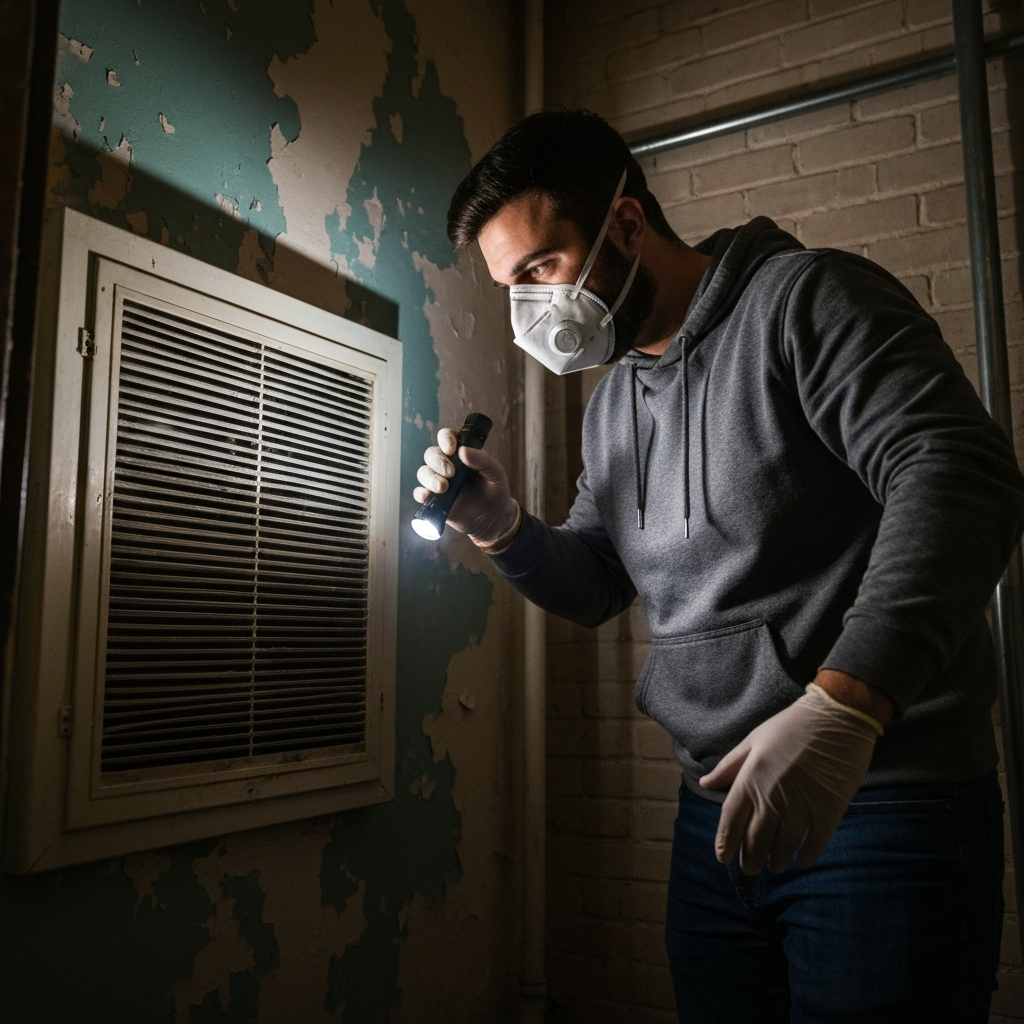
Before you start pulling things apart, let’s talk safety. When you disturb a hidden mold colony, you can release a high concentration of spores into the air. It’s crucial to protect yourself.
- Wear a Mask: Use a high-quality N95 respirator mask to avoid inhaling spores.
- Protect Your Hands: Wear gloves, especially if you’ll be touching damp or discolored materials.
- Don't Use a Fan: Avoid turning on fans in the area, as this can spread spores throughout your home.
Your "Most Wanted" List: Top 10 Hiding Spots for Hidden Mold
Ready to play detective? Grab a good flashlight and start your search in these common problem areas. Follow the smell of mold—your nose will often lead you to the general vicinity of the problem.
1. Behind Walls and Wallpaper
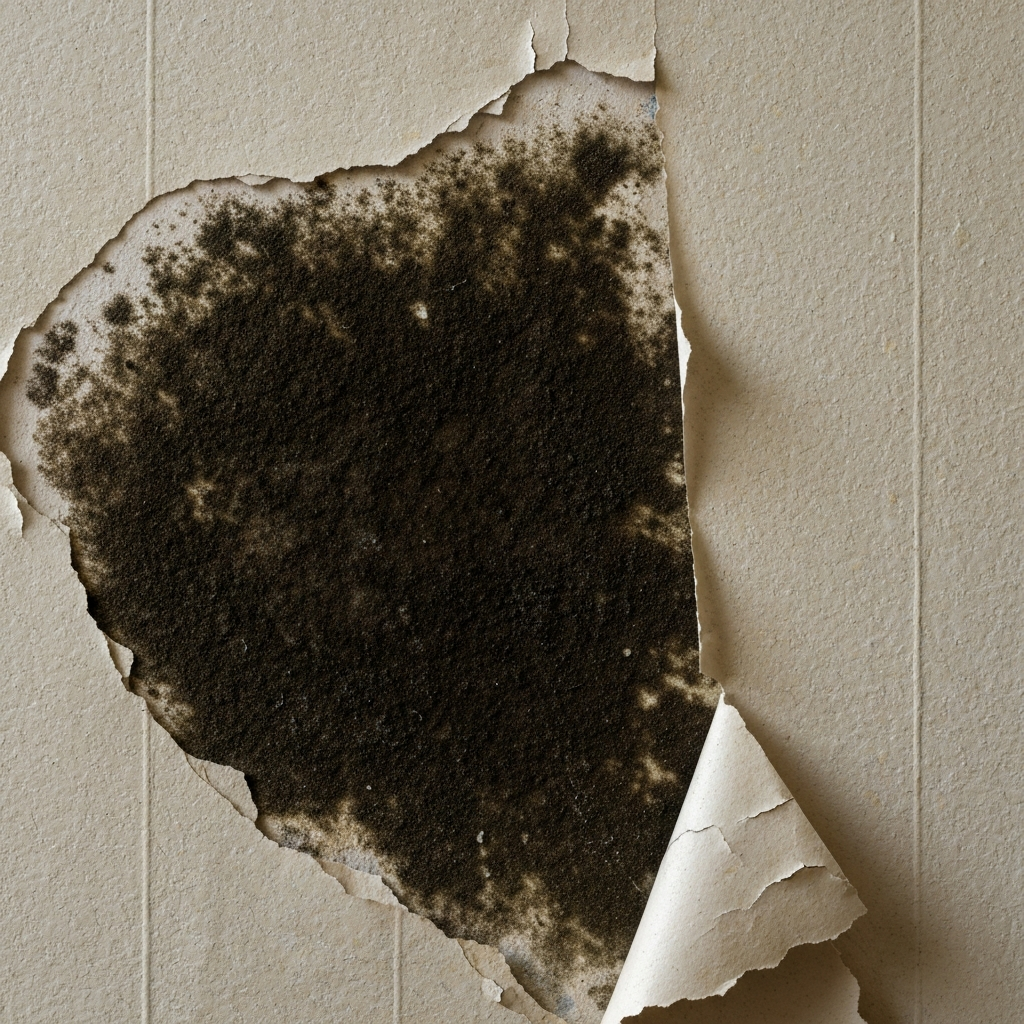
This is the number one culprit for hidden mold. A slow leak from a pipe inside the wall, a poorly sealed window, or condensation can provide all the moisture mold needs. Drywall's paper backing is a favorite food source.
Visual Cues: Look for peeling or bubbling wallpaper, discolored or soft patches of drywall, or faint, map-like water stains. Gently press on the drywall; if it feels soft or crumbles, that’s a red flag.
2. Under Carpets and Padding
Spills that weren’t dried properly, a flood, or even a concrete slab that wicks moisture from the ground can create a perfect environment under your carpet. The padding acts like a sponge, holding moisture for a long time.
How to Check: In the corner of the room where the smell is strongest, carefully pull back the carpet and check the padding and the subfloor underneath for discoloration, dampness, or a concentrated musty smell.
3. Inside Your HVAC System and Vents
Your heating and cooling system can become a super-spreader for mold. Condensation in drip pans or moisture in the ductwork can foster growth, and every time the system kicks on, it blows spores throughout your home.
How to Check: Open a vent cover and look inside with a flashlight for any dark, spotty growth. Check the drain pan near your indoor AC unit to ensure it’s draining correctly and isn't holding stagnant water.
4. Around Leaky Pipes (Sinks, Toilets, Tubs)
Even a tiny, slow drip from a pipe under your kitchen or bathroom sink can go unnoticed for months, creating a dark, damp paradise for mold inside the cabinet. The same goes for the wax ring at the base of a toilet or leaky tub caulking.
Visual Cues: Look for water stains, warped wood at the bottom of the cabinet, or peeling vinyl flooring near the base of a toilet or tub. Use your flashlight to inspect every pipe fitting.
5. Behind Large Appliances
When was the last time you looked behind your refrigerator, washing machine, or dishwasher? Leaky water lines for ice makers or failing washing machine hoses are incredibly common sources of hidden mold.
How to Check: If you can do so safely, pull the appliance away from the wall. Check the wall, the floor, and the hoses for any signs of leaks or dark, fuzzy growth.
6. In the Attic and Crawlspace
These out-of-sight areas are prone to moisture from roof leaks or ground moisture. Poor ventilation traps warm, moist air, making these spaces prime real estate for mold colonies on insulation, roof sheathing, and floor joists.
Visual Cues: In the attic, look for dark stains on the underside of the roof deck. In the crawlspace, check for damp insulation and look for white, black, or green growth on the wooden structures. If you're unsure if what you're seeing is mold or mildew, it's always best to investigate further.
7. Behind Baseboards and Trim
Baseboards can trap moisture from mopping, spills, or humidity that condenses at the coolest part of the wall. Mold can grow on the backside of the trim and the drywall behind it.
How to Check: If you've exhausted other options and the smell is strong along a particular wall, you may need to gently pry off a section of baseboard in an inconspicuous area for a peek.
8. Inside Window Sills and Frames
Condensation is a major issue for windows, especially older ones. Moisture can collect on the sills and inside the frames, leading to mold growth on the wood, drywall, or even on the accumulated dust and dirt.
Visual Cues: Look for black spots in the corners of the window tracks or peeling paint on wooden sills. This is a common place to find some of the most common types of household mold.
9. In Your Chimney
If you have a fireplace that isn't used often, a poorly sealed damper or cracked chimney crown can let rain and moisture in. Soot provides a carbon-rich food source, and the dark, damp flue is an ideal chimney for mold growth.
How to Check: A strong, musty smell coming from your fireplace when it's not in use is a major clue. A professional chimney sweep is the safest person to perform an internal inspection.
10. Behind Cluttered Storage
Basements, garages, and closets packed with cardboard boxes and other items can restrict airflow. If any humidity is present, these stagnant, cluttered areas can easily start to harbor mold on the boxes, their contents, and the walls behind them.
How to Check: If the smell is strongest near a storage area, it's time to declutter. Move items away from the walls and inspect them and the wall surfaces behind them.
You Found It... Now What?
Congratulations, your detective work paid off! You’ve tracked the smell of mold to its source and found a suspicious patch of discoloration, fuzz, or staining. The first step is to get an initial idea of what you're dealing with. Is it just a harmless stain, mildew, or a more problematic type of mold?
This is where technology can give you a quick and helpful first opinion. Instead of guessing, you can get a rapid analysis right from your phone.
Finally found the source of that smell? Take a picture of it and run it through Mold Detector AI to confirm.
Our AI is trained on thousands of images to help you distinguish between mold and other look-alikes, giving you more clarity and peace of mind as you decide on your next steps.
When to Call a Professional
While identifying the source is a great first step, some situations are best left to certified mold remediation professionals. Call an expert if:
- The moldy area is larger than 10 square feet (about a 3x3 foot patch).
- The mold is in your HVAC system. This requires specialized cleaning to avoid contaminating your entire home.
- The mold problem was caused by sewage or contaminated water.
- You are highly sensitive to mold or have a compromised immune system.
For smaller, surface-level issues on non-porous surfaces, you may be able to handle it yourself. Always research and follow safe cleaning procedures. We have a guide on how to safely clean small areas of mold that can help.
Trust Your Nose and Take Action
The persistent smell of mold is a clear signal from your home that a moisture problem needs your attention. Don't ignore it. By methodically checking the common hiding spots, you can track down the source and take control of the situation. Finding hidden mold is the first step toward restoring your home's healthy environment and your own peace of mind.
Ready to put this into action?
Finally found the source of that smell? Take a picture of it and run it through Mold Detector AI to confirm.
Launch Mold Detector AIFurther reading
Recommended next reads
- Mold on Window Sills: Why It Happens and How to Stop It for Good
- Black Specks in Your AC Vents: Is It Dust or Dangerous Mold?
- What Does Ceiling Mold Look Like? A Homeowner's Guide to Identification
- Is It Dangerous Black Mold? Stachybotrys vs. Other Common Molds
- What Does Black Mold Look Like? A Homeowner's Guide with Pictures